The Most Disruptive Year in Decades: How and Why AR Will Evolve in 2026
Analyst Relations is entering one of its most disruptive years in decades. In 2026, the merging of agentic AI, new research formats and AI-first buyer behavior will push AR far beyond its regular “relationships plus deck” comfort zone.
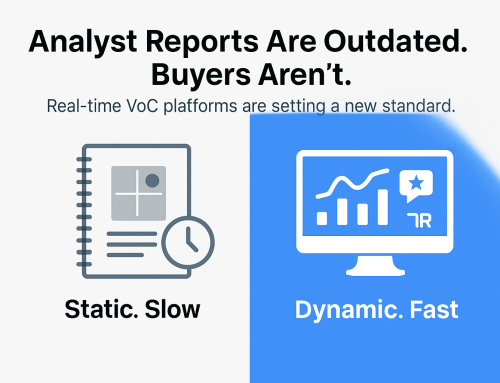
Increasingly pervasive AI integration will affect AR budgets and the behavior of analyst firms, leading to a further shift in how buyers access recommendations from third parties, such as analysts … and GenAI models.
Vendor AR leaders will be expected to orchestrate intelligent co-pilots, govern how AI interacts with analyst content, and demonstrate their impact using real-time data on influence and research consumption, rather than relying on anecdotal wins.
Buying journeys are starting differently: Buyers are already beginning solution and vendor discovery with AI assistants integrated into enterprise platforms instead of search engines or vendor sites, and analyst content is increasingly delivered directly into those environments through collaborations between major firms and hyperscalers. This shift fundamentally alters how analyst insights are discovered, interpreted and trusted.
Against this backdrop, Destrier’s seven predictions for 2026 examine how AR must evolve as analysts, buyers, vendors and AI co-pilots all share the same agentic research environment. The recent move by IDC to incorporate its intelligence into AWS’s agentic AI research platform indicates that this future is no longer hypothetical; it is being integrated into mainstream enterprise workflows today.
AR co-pilots will be pervasive: Destrier envisions a world where co-pilots quietly operate in the background of every AR program; where real-time Analyst Influence Graphs replace static tiering; where “prompt-native” research is written as much for machines as for humans; and where emerging evaluation frameworks clash with established quadrants in fast-changing markets.
Looking ahead to 2026, this also signifies long-overdue transparency in research consumption analytics, board-level oversight of AI workflows, and spatial or physical‑AI-driven analyst experiences that reshape how vendors create briefings and events. In essence, 2026 marks the year AI in AR starts becoming mainstream.